Discontinued Australian labels are easiest to shop when you separate recognition from verification. A familiar print may catch your eye, but the label, measurements, construction and condition determine whether the garment belongs in your wardrobe.
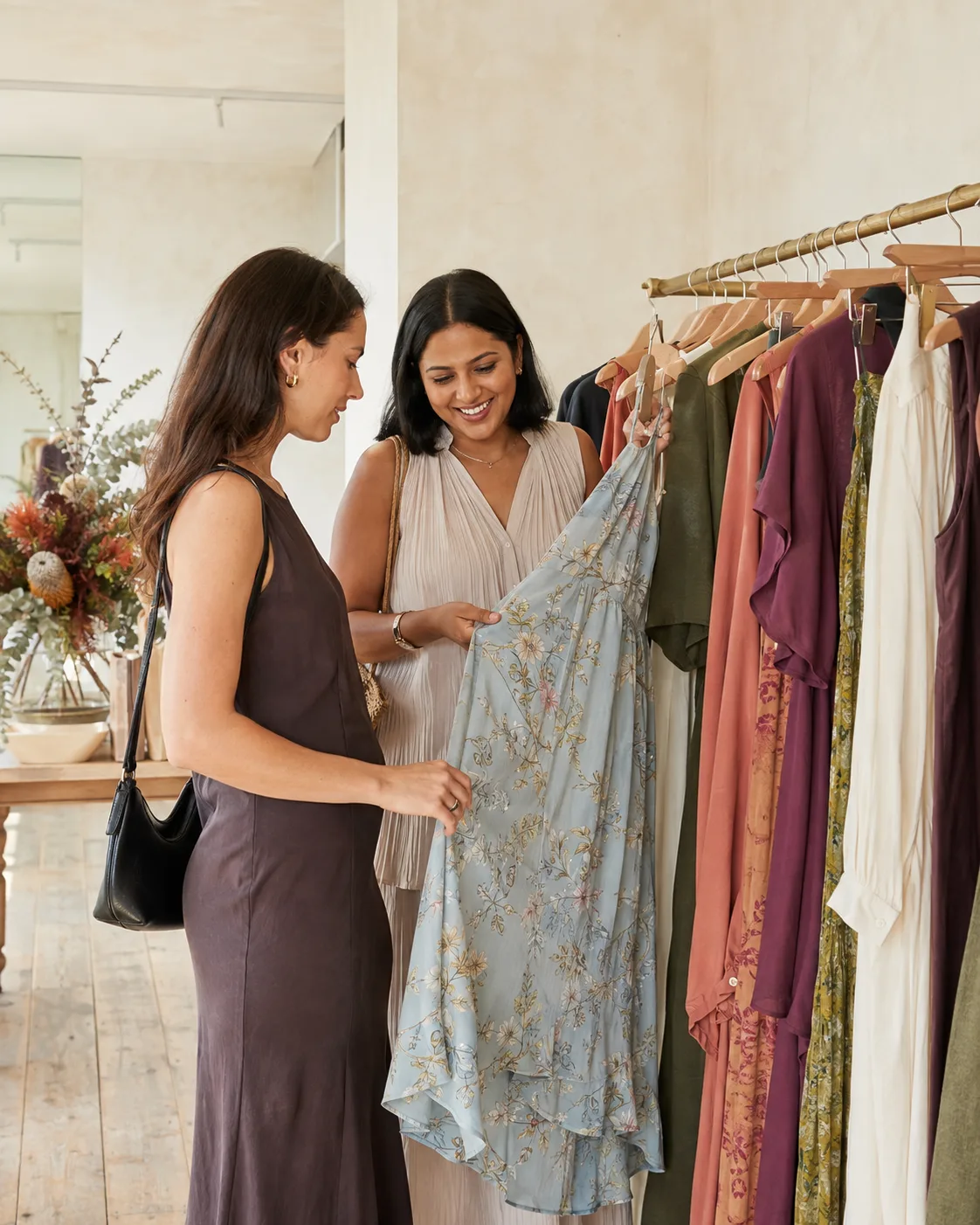
1. Identify the exact style
Ask for a photograph of the brand label, care label and any swing tag. Search the full product name in quotation marks, then remove the colour if results are sparse. Compare neckline, sleeve, closures and seam placement—not just the print.
2. Request useful measurements
Have the garment measured flat and unstretched. For dresses and tops: underarm width, waist, hip and shoulder-to-hem. For trousers: waist, hip, front rise, back rise and inseam. For one-pieces: add shoulder-to-crotch. Double flat widths where appropriate, then compare with a similar garment rather than body measurements.
3. Look beyond “excellent condition”
Condition words are subjective. Ask about underarms, necklines, hems, zips, seat seams, pulls, pilling, altered hems and missing belts or buttons. Pale garments should be photographed in diffuse daylight; sheer fabric should be placed over a contrasting surface.
4. Ask concise, answerable questions
“Has it been altered?” is more useful than “Anything wrong with it?” Ask whether the seller is the original owner, how it was cleaned, whether it has odour, and whether the listed photos show the exact item. Keep answers in the platform message thread.
5. Inspect before cleaning
Photograph the parcel and garment on arrival. Check it against the listing before removing tags or laundering. If it is as described, read the care label and test any treatment on an inconspicuous area. Vintage and older contemporary garments can react differently from new equivalents.
What a fair listing includes
- The exact garment, photographed front and back.
- Brand and fibre-content labels.
- Flat measurements and tagged size.
- Every flaw shown clearly.
- Alteration and cleaning history, when known.
- A return policy or platform protections stated up front.